Sharing Ourselves Through The Magic of Music
How Tyler, the Creator's cratedigging, Jula's @soundwavesoffwax, and my journey with 311 reflect why we share music with others

“The most important thing is to recognize… that it’s an honor to be able to play music and share that experience. Music is magic, so watching an audience and an artist find each other from a distance and being able to even make that connection is such an honor.” - Zane Lowe on giving artists a platform to be discovered
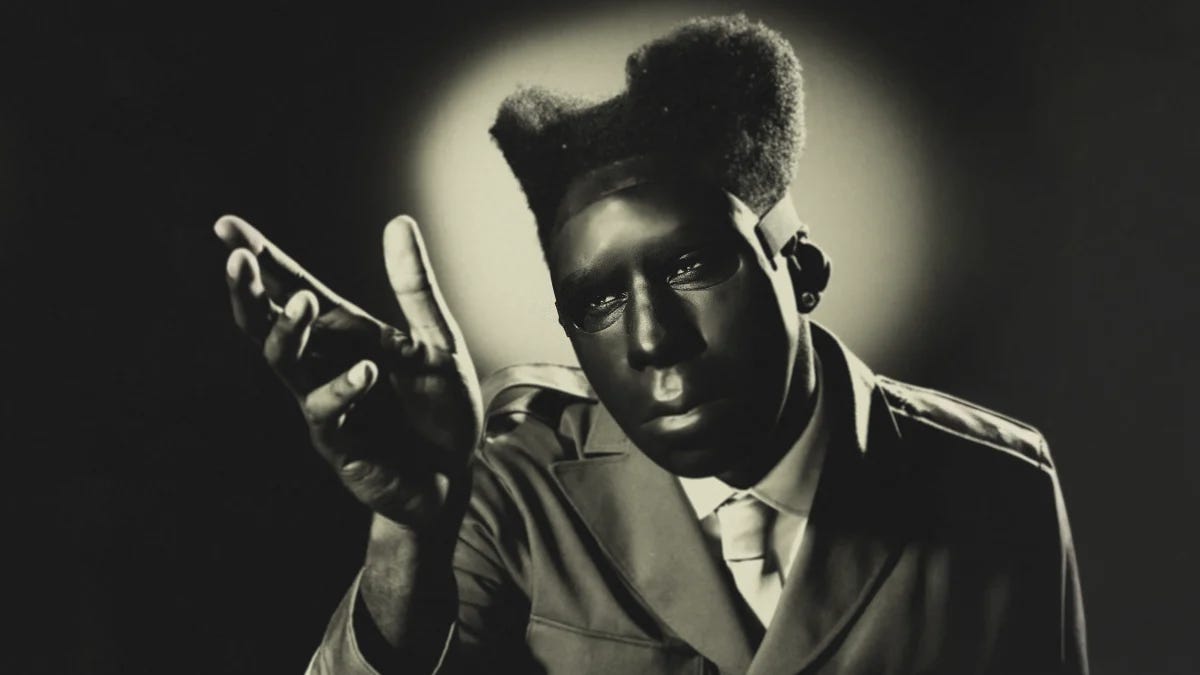
During Tyler, the Creator’s Chromakopia tour, he walks across a suspended walking bridge connecting the main stage to a tiny satellite stage where the audio engineers are stationed. Once he steps down to this secondary space, the engineers clear the area, revealing a cozy recording studio setup, complete with a green rug, a couch, and a small table with a box. That otherwise ordinary box on its surface turns out to be a gateway into Tyler’s career and the influences that continue to shape his evolving sound.
Tyler is the first artist I’ve seen dig through a box of vinyls on stage. Crate digging is typically a solitary and intimate act of music discovery, not one under the spotlight in front of a basketball arena full of screaming fans. All of his albums were in this box, some he’d briefly pause on for an audience reaction, but pass. For his more recent and seminal albums, like Igor and Call Me If You Get Lost, Tyler would hold on them, with the footage zoomed in on the jumbotron, signaling that the next slate of songs would transport the show back to that era of his career. It brought intimacy to a grand production and a sense of connection with all 18,000 individual relationships to his near two-decade musical metamorphosis.
But that only scratched the surface of its intention. Between his albums were a curated selection of iconic albums that influenced him and his career. There was Stankonia, the Outkast album that exploded the Atlanta hip-hop duo into the mainstream while embracing more Hendrix and less Dungeon Family. Then, there was Jill Scott’s Who Is Jill Scott? Words and Sounds, Vol. 1, her silky, jazz-inflected, yet genre-bending debut album that happened to be released 25 years earlier to the day of Tyler’s fourth and final night at Barclays Center. Tyler thanked her in a brief monologue in an extension of a quick memoriam speech he’d launched into earlier in the show, name-dropping recently pass music legends that left a looming imprint on him, like Sly Stone and Roy Ayers.
Tyler has also worn his influences on his sleeve, so it’s no secret to any of his fans that Pharrell Williams, Chad Hugo, and Clipse are towering forces in his mind. In many other interviews, he gushes over his love of chords and song structure, before delving into the jazz, R&B, and 80’s pop music that’s perfect in his ears.
Sharing that infectious love, uncontainable excitement, and ultimately, the recommendation goes a level deeper than a meaningless cover. In an age where so many are blindly depending on mysterious algorithms for music discovery, there’s a special flavor of intimacy in receiving the gift of an album recommendation by a human being who feels indebted in gratitude to its creator. When that friend, that significant other, that beloved rapper you paid a ticket to see at an NBA arena, has a glean in their eye while explaining what a musical project means to a genre, a community, or their personal arc, it’s an offering of who they are now and how they came to be. That’s how bonds deepen through the great connector that is art. We see each other clearer, knowing the story behind the person and why this specific project, in the vast history of music, burnished a brand in their subconscious forever.
Tyler was putting on more than a performance. He was giving us another reason to go back, and listen to those albums and artists with a newfound appreciation. And to forge a deeper bond with Tyler, the deeply passionate human.
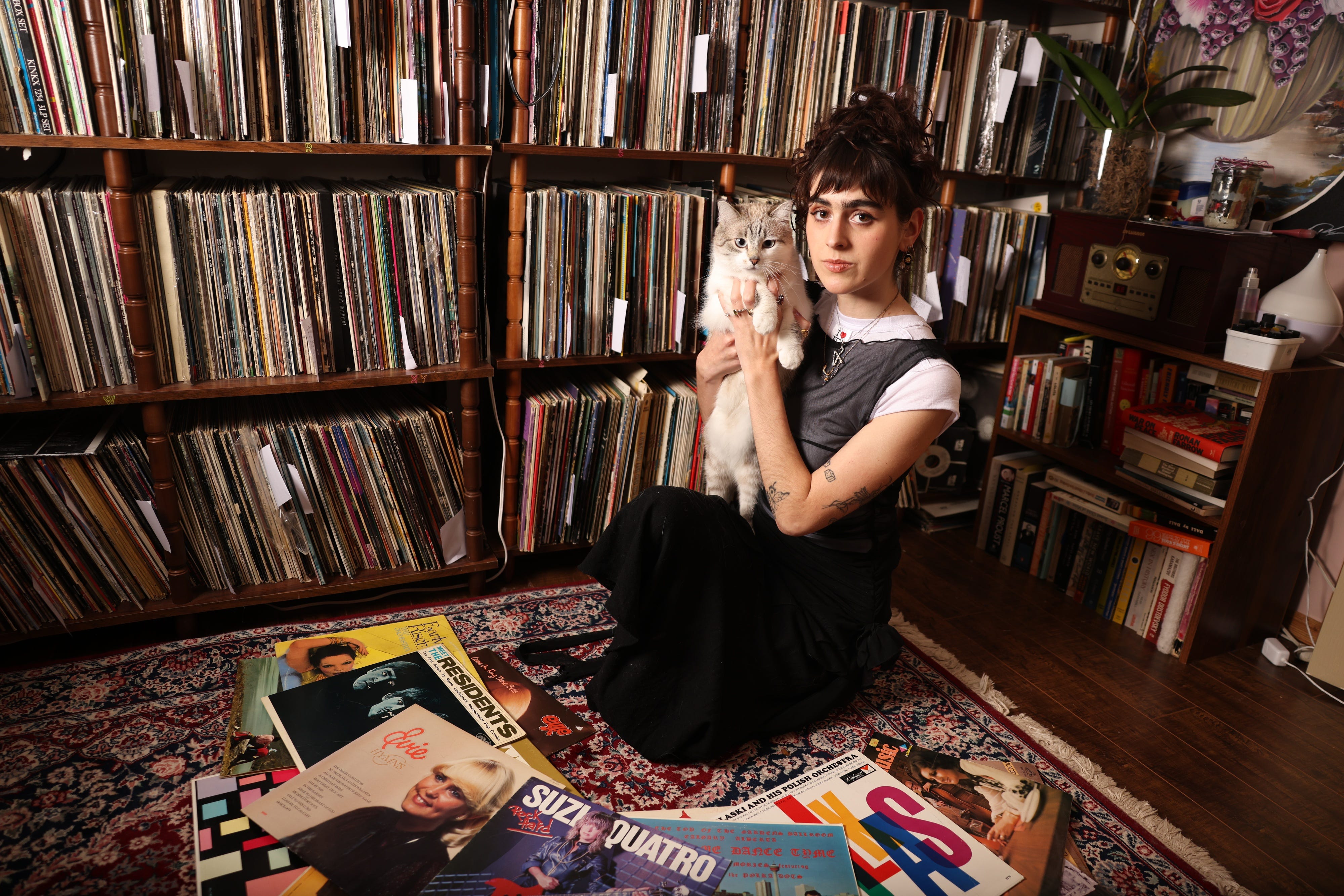
When her father passed away, Jula was left his collection of 10,000 records that span genre and time. As an avenue to grieve and deepen her bond with her father, Jula created @soundwavesoffwax, a social media channel where each video captures her listening to one record in full and sharing her reaction with the world with a breakdown of the album’s background, sound, and her personal favorite track.
In cultivating a community with hundreds of thousands of music nerds and grieving humans across the world, she told the Guardian, “these people really keep my father alive for me, because he always talking about the music. I’ll mention an album, and someone will give me a fact about it, or a little tidbit, and that makes me feel like my father’s in the room, because that’s what he’d be doing.” And through these conversations that unfold in the comments section, others offer a piece of their own grief with her and this supportive following. ‘“My dad passed away a few years ago and although he wasn’t a record collector, this account really helps me put things into perspective when I find things that he left behind,” one commenter wrote. “They take on a whole new meaning and tell me so much more about who he was than I ever knew.”’
Music’s alchemic properties can claw you out of the depths or fill you up with joy when life leaves you empty. It’s also a fulcrum for sharing experiences. To be able to celebrate music while collectively healing is precious. To discover new corners of music while rediscovering joy in concert with total strangers speaks to the magic of music.
Jula tapped into something greater than herself. In sharing her grieving process by sharing a world of music, a global community are building each other up together. Her channel become a digital third place of sorts that lets everyone find comfort and delight around an album, no matter what year it came out, how obscure it might be, or someone’s personal connection to the work.
Sharing art is a healthy element in expressing ourselves, learning about others, and creating beautiful microscopic and sweeping moments that add color to our coexistence (especially when the world feels so dark and cynical).
We all have our own versions, and seen plenty more, of how art has added a beam of light to our relationships. There’s a reason why couples have “a song” or why we’re asked which song will soundtrack our funeral. It’s why our streaming-dominated society consistently asks “what show are you watching?” We’re searching for meaning in the meta-text, the way a lyric spins two of us into vertigo or how the spontaneous rush of the moment threads us together.
Like the time a bunch of us randomly starting singing “Don’t Stop Believin’” and “Shots” on line for a ride at Disney World during our senior trip and strangers chimed along.
Or when I saw NERVO and R3hab in Barcelona with study abroad friends who, for five and a half weeks, were my best friends in the world, and we splashed around a pool behind the DJ setup with reckless abandon, like life would always feel that free.
Or how I helped my friend, Ethan, move some boxes into his second Harlem apartment (he’s now on his third), and when we were done, we bought tickets to see Kendrick Lamar turn Barclays Center into a maximalist art therapy session a couple hours later. On a spontaneous whim and “fuck it, why wouldn’t we?” moment, we ended up at the greatest concert either of us have seen to this day.
Art is for sharing the moment together. It’s why music and movies are “released.” They’re freed from their creator’s possession and gifted to the world. When you receive it, you and the original artist are connecting over an experience. You’re taking in their intended story, grappling with its meaning, and bringing your own memories, environment, and perspective to the fold. Then, you might gush over it to friends, family, loved ones, a date who might become a loved one, the colleagues you actually enjoy spending time with, or a like-minded thread on the internet that shares in your nerdy excitement.
Sharing art is a form of love. A love for the art itself and a love for who you’re sharing it with. That might be the one person you share everything with or the few million fans that dissect your music and picks up on your influences through your carefully curated samples.
Sharing art is a form of confession. A confession of not having the words to express all the feelings you’re feeling. That might be a collection of joy, grief, relief, confusion, and celebration that 10,000 records only begins to contextualize your emotional ups and downs.
Sharing art can feel like sharing everything there is to share about you. It’s designed to move us, inside and out. To let it consume us in all its glory and intention. To chew on what it’s doing and saying, and think through its layers, and parse out what resonates with our own experience. To take a little risk in being a little vulnerable and gifting our huge thoughts and feelings on what it all means to the people who the most to us.
At the risk of dating myself, I’d turn on a few MusicChoice channels during commercial breaks of shows and movies back in high school, when cable was still ubiquitous in a pre-Netflix world. I discovered a lot of new songs, artists, and genres in those couple-minute, channel-flipping bursts. The first time I heard the heavily distorted and electrifying opening riff of 311’s “Down” was during one of these moments. It was one of those rare times when you hear a band doing something new, like fusing rock, hip-hop, and reggae in a seamless, but fun and unserious fashion.
It blew open a portal in my mini universe. “Down”, to my teenage mind, was as revolutionary in its sound as it was revelatory that it existed at all. In one of those rare times when all the stars aligned, I had to tell as many of my friends about 311 after doing the full deep dive and, surprisingly, they took the recommendation. And loved the band, too. I was able to recruit three of my friends–Mike, Jarret, and McCormick–to see them headline at PNC Bank Arts Center in Holmdel, NJ, with The Offspring and Pepper as openers, a dream lineup for us at the time. A summer concert tradition was born. Each summer, I couldn’t wait for March to roll around when the Unity Tour dates and opening acts would be announced. And I couldn’t wait to recruit a cohort of friends and friends of friends to join. But, by my early-to-mid twenties, as the tradition carried on, I fell off, losing interest in the year’s 311 show as many of my friends from that time kept going. With passion, excitement, and vigor.
Until this June.
Jarret’s wife, Sara, bought him tickets to see 311 at Pier 17 as a Father’s Day gift. A day or so before the show, Jarret asked if I wanted to join. He mentioned that this was the 15-year anniversary of that first 311 concert, which was his first concert ever. It was a show where he almost lost all of our belongings, wallet and car keys included, because he, uh, wasn’t in his right mind and left the string bag holding our shit elsewhere on the lawn1. Now, he’s got a wife and kid, and Nick Hexum, 311’s lead singer, hasn’t aged a bit. As the chorus goes, “We’ve changed a lot and then some, some. You know that we have always been down, down.”2
This Pier 17 show was my first at the venue and first time I’d seen 311 in probably a decade. And everything about it brought me back to why I was so hellbent on getting my friends to discover 311 and come to their shows with me. The weather. The panoramic views of the East River’s skyline and iconic New York landmarks like the Brooklyn Bridge. Most importantly, it was sharing the joy, banter, and laughs about the music, Nick Hexum’s supervillain eyebrows, and S.A.’s waterfall of sweat with friends and a mostly middled-aged crowd with beaming smiles on their faces.

When I first recommended 311 as that awkward, insecure teenager, it was done as a desperate attempt in search of finding myself as much as finding deeper connection with my friends. But, now, to still reap the rewards as a more-grounded, thirty-something is a touch of sweetness in the recipe of life. I get to keep sharing in layered moments with these same friends and the important people they’ve accepted into their lives, while reconnecting with the core of who I once was.
I’ll always be down for that.
Blink and you’ll miss it, 8/20/25
These playlists fill up fast. I’ve held onto this one for a over month and the next one is ready to go (but you’ll have to wait). Here are 140 songs from 140-ish different artists that have been taking over my ears lately (or a couple weeks ago).
Highlight #1
Elegantly Wasted by Hermanos Gutiérrez (Feat. Leon Bridges) - Parlaying the popularity of his sublime collaborations with Khruangbin, Texas Sun and Texas Moon, Leon Bridges teams up with the Ecuadorian-Swiss instrumental duo of Hermanos Gutiérrez for another entry into the Southwest-meets-South American, sun-inflected instrumental rock. This track feels sweaty and sensual, like a romantic encounter starting to heat up, real quick. Like with his Khruangbin collabs, Leon shapes his soulful vocals to seamlessly flow with the reverb-drenched guitars and transports you to what feels like a Santa Fe fever dream.
Highlight #2
Adventure Spirit by Yvette Young - Fresh off contributing to the score of Superman, Yvette Young is arguably the greatest guitarist making music today. Her math rock sensibilities, complex arrangements, and knack for melody transform her band, Covet, into an outlet for some of the richest songs of the last decade. Adventure Spirit is no different. With the help of orchestral instruments, she puts on a finger-picking masterclass, taking the listener on a transcendent, emotional sonic journey with an acoustic guitar.
Highlight #3
Serpentine by Disniblud - Disniblud’s self titled album is a cinematic clash of experimental electronic and rock sounds between Rachika Nayar, an indie musician, and Nina Keith, a composer. Serpentine is the album’s seven-minute epic that carefully builds, like a towering post-rock classic, with Cassandra Croft’s angelic vocals guiding the way until the song crescendos into purposeful chaos. It’s gorgeous.
Luckily, it was laying on the lawn, untouched, about twenty or so feet away.
Let’s be honest, 311 aren’t poet laureates and aren’t trying to be. Cringeworthy lyrics later in the song include “You know we dazzle like ghetto boom boxin’ battles, rattle inside your head feel redeemed like cola bottles.”